

Call us now
07971191840
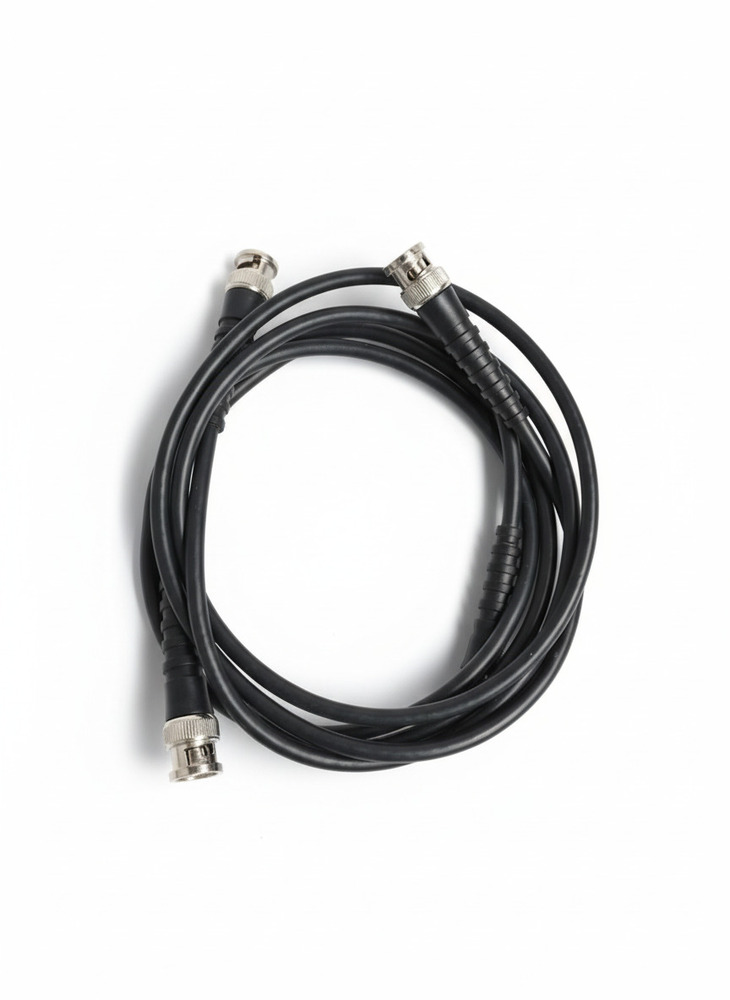

UPV Cables
An ultrasonic pulse velocity cable is an essential component that is specialised for high frequency signal transmission and is used in UPV testing to evaluate the quality uniformity and structural integrity of concrete and other solid materials In a UPV test ultrasonic pulses are sent from a transmitter probe through a material and received by a receiver probe The cable is the essential medium that connects these probes to the UPV instrument enabling accurate sending and receiving of signals Although it appears to be a simple accessory the UPV cable plays a critical role in ensuring the reliability of the entire measurement process
The UPV cable transmits electrical signals between the transducers transmitter and receiver and the UPV meter When the transducer generates an ultrasonic pulse the cable carries this signal to the instrument where the travel time is measured In most of the setups the cable must carry highfrequency lownoise signals without introducing any distortions It also ensures stable connectivity while technicians move the probes around the test surface Because UPV testing is often times performed in field conditions construction sites bridges tunnels old structures the cable must be durable flexible and resistant to wear
The accuracy of UPV testing depends heavily on the quality of the transmitted pulse Even if the probes and the main UPV instrument are functioning perfectly a damaged or degraded cable can compromise the entire reading The UPV cable ensures that signals retain their strength and timing from point A to point B Any delay noise or signal loss directly might influences the measured pulse velocity Since UPV values are used to estimate concrete strength detect cracks check voids and evaluate uniformity in the concrete the cable becomes a central element in maintaining the reliability of structural assessment
A common challenge in UPV testing is that often times calibration issues are mistakenly attribute to the UPV meter itself when in reality the problem might lie in a worn or partially damaged cable Over time UPV cables undergo mechanical stress due to bending pulling coiling exposure to sunlight moisture or sharp edges Internal copper strands may break insulation may thin or crack and connectors may loosen These small deterioration can accumulate and cause improper connectivity signal attenuation or complete signal loss
During calibration the UPV device is expected to send and receive pulses through a known reference medium such as a calibration rod If the cable is worn the pulses captured may be distorted delayed or weakened This leads to incorrect calibration settings even though the instrument itself might be functioning correctly This issue can waste the time of the technician while troubleshooting the device without realising that the cable is the true source of the problem
Once calibration is compromised every measurement becomes unreliable Even if the device was correctly calibrated using a faulty cable during testing still introduces significant errors A damaged cable can slow down the electrical transmission of the pulse introduce electrical noise that mimics cracks or voids cause incomplete or inconsistent signal transfer create fluctuating velocity readings even in uniform concrete
Since pulse velocity is inversely proportional to travel time even small delays caused by cable degradation can greatly alter calculated velocity values The result is inaccurate representation of the materials internal condition Lower pulse velocity readings may suggest weaker concrete higher porosity or the presence of cracks even when the structure is free of any deformities Unstable signals may appear as material discontinuities that do not actually exist
Such false interpretations can trigger unnecessary repair works invalid test reports or incorrect decisions regarding structural safety Conversely if a worn cable produces artificially high velocities dangerous defects may remain undetected In both cases the consequences can be significant financially and in terms of public safety

Price:


 Get Latest Price

 Send Inquiry
 Send Inquiry
 Send SMS