About Digital Rebound Hammer
Best Digital Rebound Hammer Hammer manufacturer in India Vedantrik Technologies,
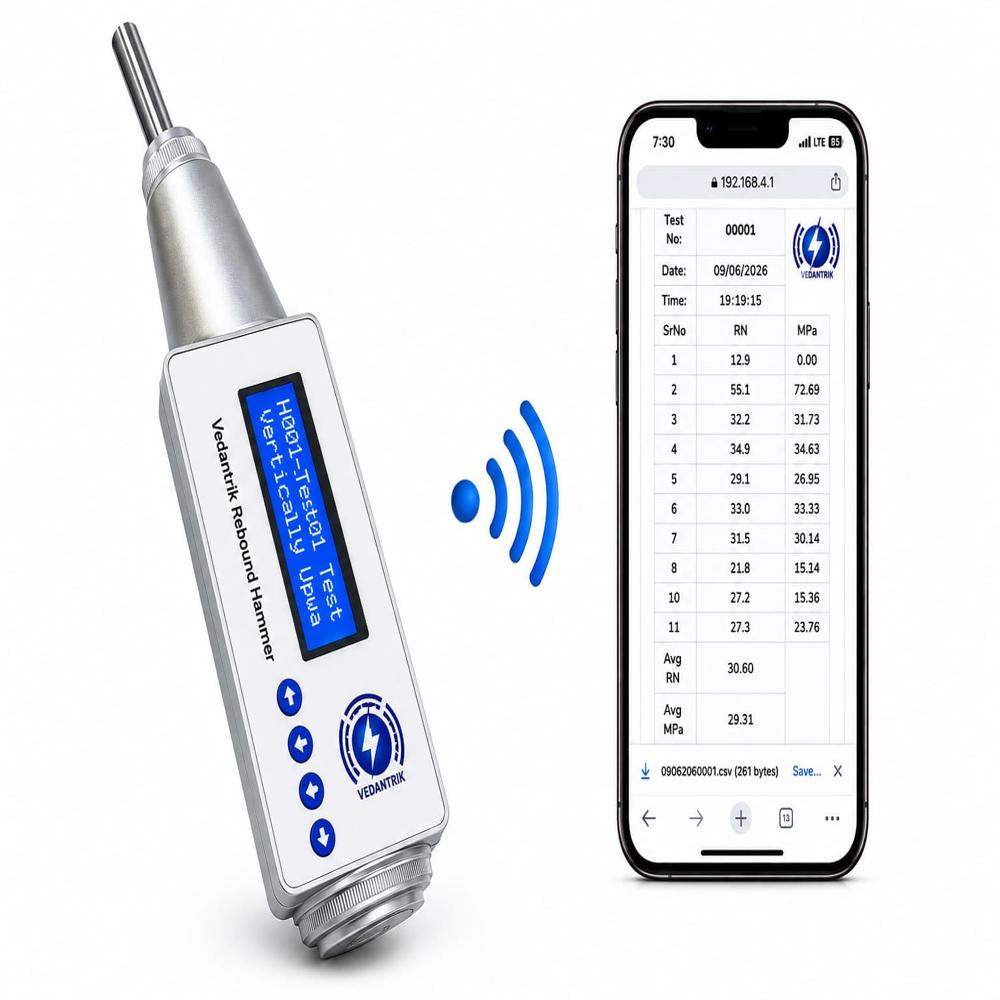
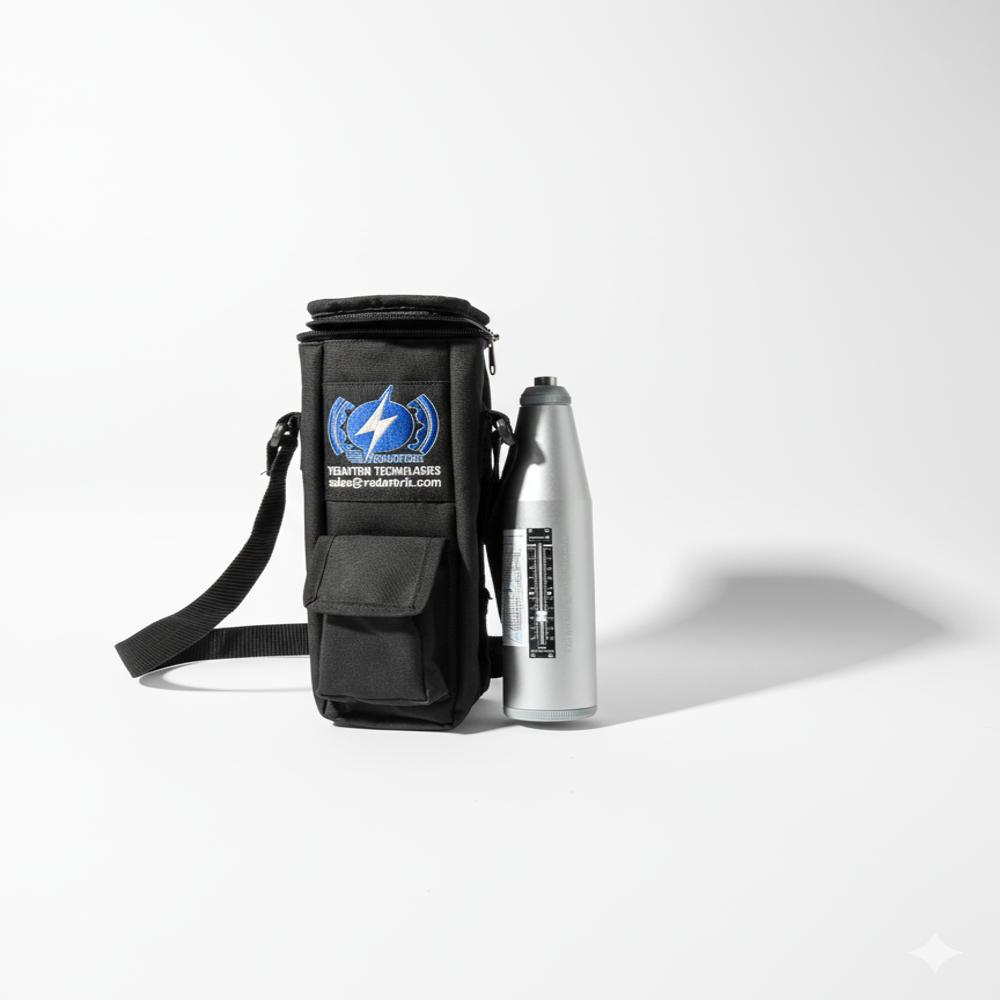
Digital Rebound Hammer for direct Compressive strength, a quick non-destructive testing and assessment of concrete quality, uniformity, and indicative compressive strength without damaging the structure.
Benefits of Vedantrik Digital Rebound Hammer
Direct Compressive strength without referring to the graph
Wireless connectivity with Laptop/PC for seamless data transfer
Automatic storage of test readings, eliminating manual data entry
Instant report generation for improved productivity
Laboratory-developed strength correlation curves for enhanced reliability
Selection of testing orientation including:
* Vertical Upward
* Vertical Downward
* Horizontal
* Inclined Upward
* Inclined Downward
Customized correction factors developed and validated by experienced engineers in the laboratory
Improved accuracy and consistency in concrete strength estimation
Digital database creation for quality control and audit traceability
Reduced testing time and enhanced operational efficiency
Engineered for Modern Concrete Testing
The intelligent software allows users to select the testing direction before measurement, automatically applying the appropriate correction factors and correlation curves. This significantly reduces human intervention and ensures more reliable strength estimation compared to conventional manual methods.
As the construction industry increasingly adopts digital technologies, testing equipment must evolve beyond manual data collection. The Vedantrik Digital Rebound Hammer represents a step forward in the digital transformation of concrete testing, quality assurance, and structural condition assessment.
Accurate Concrete Strength TestingWith a measuring range of 10-100 MPa, the Digital Rebound Hammer provides highly precise assessments of concrete's compressive strength. It's ideal for engineers and construction professionals who require reliable, on-site quality evaluation without damaging the structure.
User-Friendly Digital InterfaceAn easy-to-read LCD digital display ensures test results are clear and quick to interpret. Its intuitive operation, coupled with the ability to store up to 200 test results, facilitates streamlined data collection and management during fieldwork.
Reliable Data and Calibration OptionsThe device supports both automatic and manual calibration, ensuring measurement consistency across various use scenarios. With options to adapt to ambient temperatures between 0C and 40C, it delivers trustworthy performance in diverse environments.
FAQ's of Digital Rebound Hammer:
Q: How is the Digital Rebound Hammer used for testing concrete quality?
A: The Digital Rebound Hammer is applied to the surface of concrete, and upon impact, it measures the material's compressive strength by analyzing the rebound value. This non-destructive process allows for rapid and convenient assessment without causing damage.
Q: What benefits does digital data storage provide during field testing?
A: The device can store up to 200 test results, which enables efficient data logging across multiple sites or specimens. This feature reduces manual note-taking and streamlines post-test analysis, helping users maintain thorough records for quality control and reporting.
Q: When should I calibrate the Digital Rebound Hammer?
A: It is recommended to calibrate the hammer before the start of each testing session, after any significant physical shock, or when results appear inconsistent. The hammer offers both automatic and manual calibration modes for enhanced measurement reliability.
Q: Where can the Digital Rebound Hammer be operated regarding temperature?
A: The device is designed to operate effectively within temperatures ranging from 0C to 40C, making it suitable for most indoor and outdoor project environments commonly encountered in the construction industry.
Q: What is the process of conducting a concrete test with this device?
A: To perform a test, position the hammer firmly against the concrete surface and release the impact. The rebound value, displayed on the LCD, reflects the material's compressive strength. Results are stored automatically for later review and analysis.
Q: How does automatic and manual calibration improve accuracy?
A: Automatic calibration ensures fast, consistent adjustments based on stored standards, while manual calibration allows for fine-tuning in challenging scenarios or when using specialized procedures. Both modes help guarantee reliable readings every time.
Q: What are the key advantages of using this digital model over traditional rebound hammers?
A: This digital model provides instant LCD readouts, extensive data storage, and flexible calibration options. These features enhance testing efficiency, minimize human error, and facilitate comprehensive data management in professional concrete assessment tasks.






 Get Latest Price

 Send Inquiry
 Send Inquiry
 Send SMS
 Call Me Free