About Wireless Thermocouple Sensors
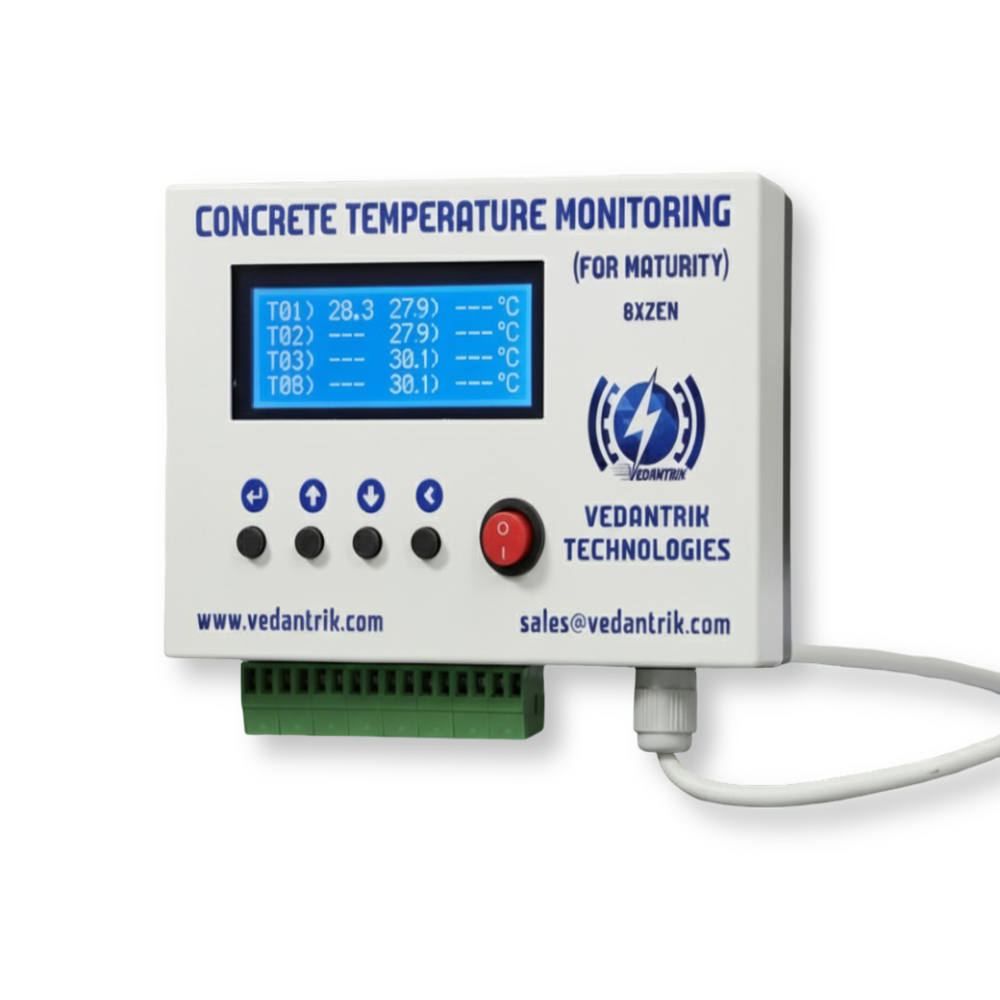
Vedantrik Wireless Thermocouple Sensors provide an advanced and reliable solution for temperature monitoring in mass concrete structures. The system is specially designed to measure the internal temperature of concrete during the hydration process, helping engineers control thermal gradients and prevent thermal cracking in large concrete elements.
Mass concrete structures such as raft foundations, pile caps, piles, dams, footings, and large foundations generate significant heat during cement hydration. If the temperature difference between the concrete core and surface becomes excessive, it may lead to thermal stress and cracking.
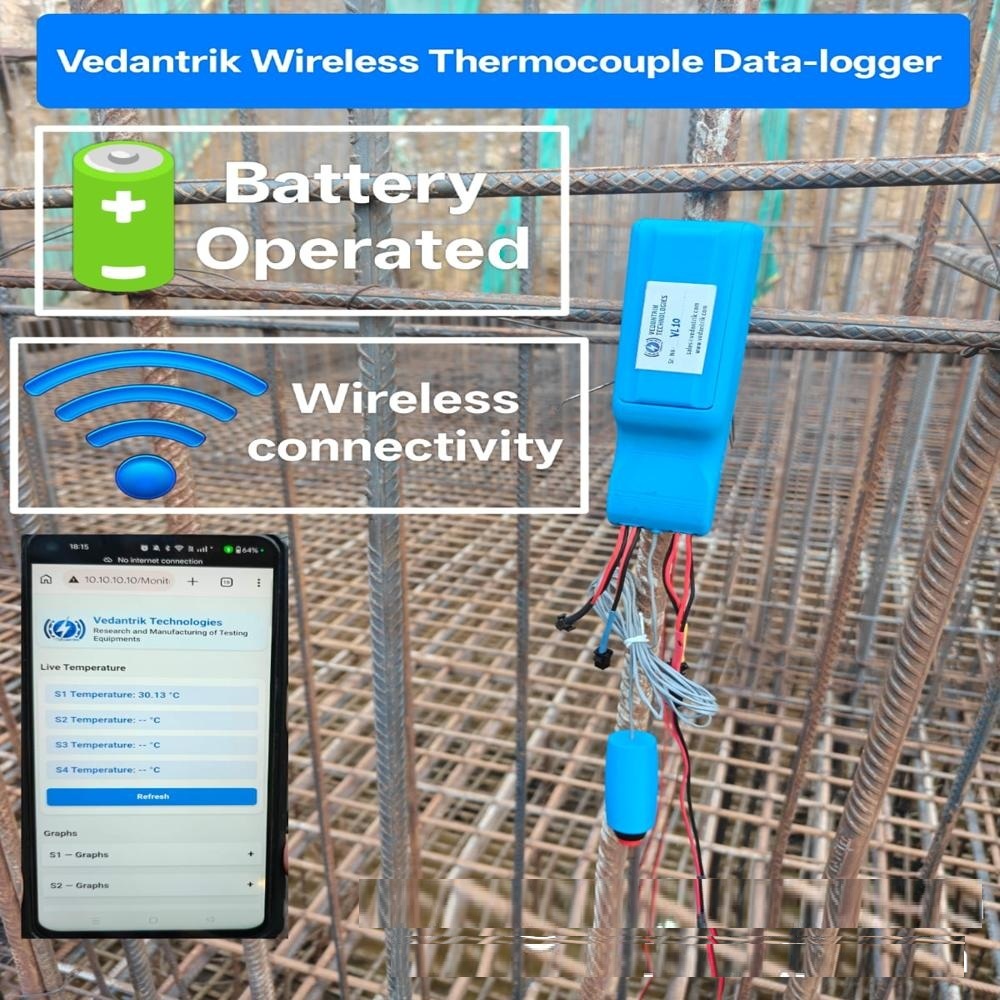
Using Vedantrik wireless thermocouple sensors, engineers can continuously monitor concrete temperature in real time without the complexity of long cables or external power supply.
Thermocouple Installation in Concrete
For accurate concrete temperature monitoring, thermocouple sensors are installed inside the reinforcement cage before concrete pouring.
At a typical monitoring location, 34 thermocouple sensors are installed at different depths when the concrete thickness is around 1.82.0 meters.
The sensors are generally positioned at:
* Top layer of concrete
* Middle or core zone
* Bottom layer
Each sensor is securely fixed to the reinforcement bars using cable ties or binding wire to ensure stable positioning during concrete pouring and vibration.
Advantages of Vedantrik Wireless Thermocouple Sensors
The Vedantrik wireless monitoring system eliminates traditional wiring and simplifies temperature monitoring on construction sites.
Key advantages include
Completely Wireless Concrete Temperature Monitoring
Battery Operated Thermocouple Sensors
No Long Cable Installation Required
Quick and Easy Site Installation
Continuous Real-Time Concrete Temperature Monitoring
Suitable for Mass Concrete Structures
This system reduces installation complexity while providing accurate temperature data throughout the concrete curing period.
Concrete Temperature Monitoring Duration
Concrete temperature is typically monitored for 7 to 14 days after casting, depending on project specifications.
The collected temperature data helps engineers evaluate:
* Peak hydration temperature
* Core vs surface temperature difference
* Thermal cracking risk in mass concrete
* Concrete maturity and strength development
These measurements are critical for quality control, structural durability, and compliance with thermal control plans in infrastructure projects.
Applications
Vedantrik Wireless Thermocouple Sensors are widely used in:
* Mass Concrete Temperature Monitoring
* Raft Foundation Monitoring
* Pile and Pile Cap Monitoring
* Bridge Foundations
* Dam Construction Projects
* Large Industrial Foundations
Why Choose Vedantrik Wireless Thermocouple Sensors
Vedantrik offers a cost-effective, reliable, and easy-to-install concrete temperature monitoring system that helps contractors, consultants, and project engineers maintain proper thermal control in mass concrete construction.
The wireless design eliminates cable management issues, reduces installation time, and ensures continuous temperature monitoring during the most critical curing period.
Wireless thermocouple sensors
Battery operated No external power required
No long cable runs
Real-time temperature monitoring of concrete core
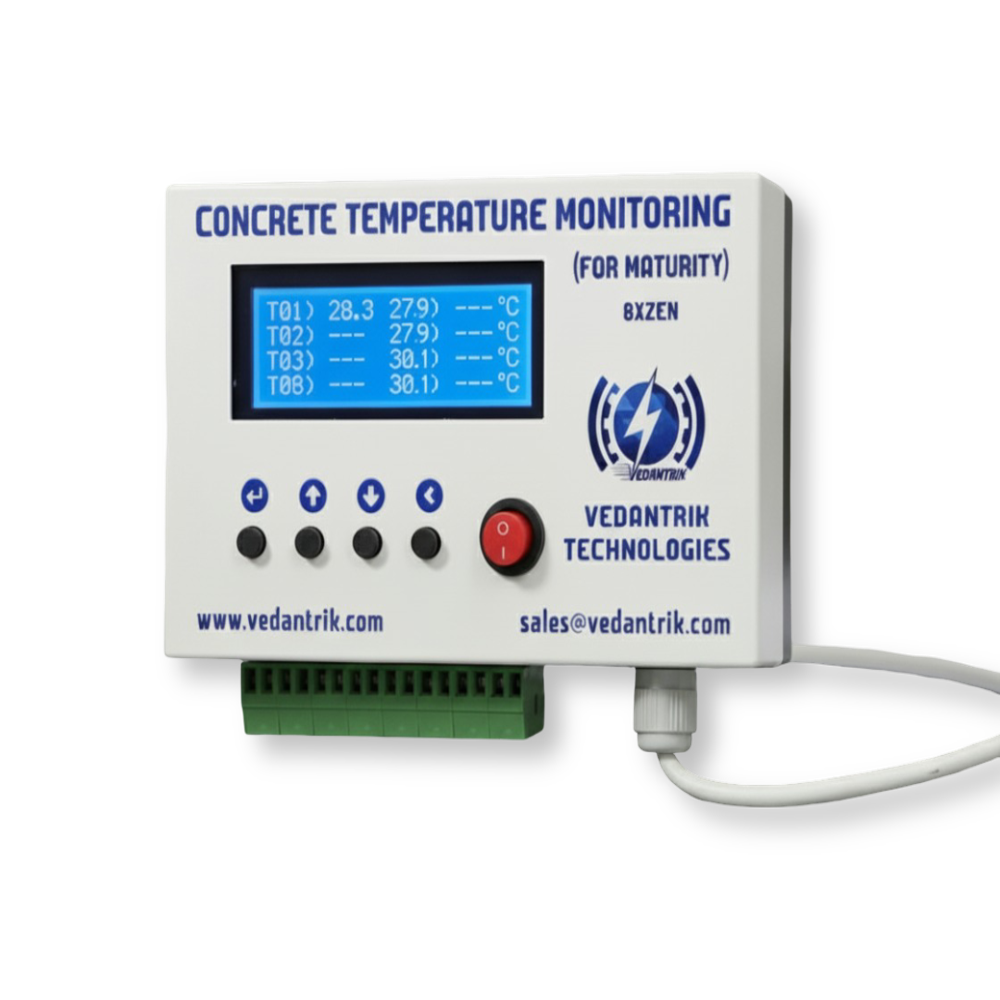
Maturity & strength estimation possible
Ideal for raft foundations, piles, footings and mass concrete
Durable Design for Demanding EnvironmentsEngineered with ABS plastic or metal enclosures and rated at IP65, these wireless sensors thrive in settings exposed to dust, splashes, and temperature extremes. The versatile storage range from -40C to 85C preserves functionality during downtime, making them ideal for a wide range of industries, from manufacturing lines to cold storage facilities.
Flexible Monitoring with Configurable FeaturesEnjoy the benefit of configurable data transmission intervals, letting you balance between real-time monitoring (as fast as every 2 seconds) and battery longevity. Alarm functions instantly notify you of temperature excursions, and depending on the model, you can monitor one or two points simultaneously with single or twin thermocouple inputs.
FAQ's of Wireless Thermocouple Sensors:
Q: How do I install and set up the wireless thermocouple sensor?
A: Simply mount the sensor in your desired location using the provided enclosure. Insert your K-type thermocouple(s), power the sensor, and follow the supplied setup instructions to configure data intervals and connect to your wireless network. Firmware updates can be performed remotely as needed.
Q: What is the maximum range for wireless communication?
A: The sensor transmits data wirelessly up to 100 meters in open, unobstructed (line of sight) environments, offering flexibility for installation across various facility sizes.
Q: When should I configure the data transmission interval, and why?
A: The transmission interval determines how often temperature readings are sent. Adjust it depending on your application-choose shorter intervals (like 2 seconds) for rapid monitoring, or longer intervals to extend battery life, which can last up to 12 months under typical usage.
Q: Where can these sensors be used effectively?
A: Designed for resilience, the sensors can be used in industrial plants, warehouses, food storage, or any setting requiring reliable temperature tracking, thanks to their IP65 protection and wide storage temperature range.
Q: What benefits do the high/low alarm functions provide?
A: The alarm functions allow remote monitoring and instant notification of temperature deviations, helping to prevent damage to sensitive equipment or products and ensuring process compliance.
Q: How do I upgrade the sensor's firmware?
A: Firmware upgrades are delivered wirelessly, enabling you to update the device without physical intervention-ensuring your sensor remains current with the latest improvements.






 Get Latest Price

 Send Inquiry
 Send Inquiry
 Send SMS